CONTEXT: This was the first long post I ever put on the web, galvanized by my shock and outrage at the multi-pronged onslaught on Paris in November, 2015 by Islamic terrorists, rabid to strike at a city that is both a laboratory and exquisite emblem of Western Civilization. Far more than just its elegant architecture or being the background of many illustrious lives, Paris helps define the vitalizing ideals that both shaped and animated our shared culture; and still do.
Here, I try to defend France (an imperfect society, as they all are, but one I deeply admire) by invoking what all of us in ‘the West’ owe to her. Much of that is among the attributes that drove those fanatics’ murderous hostility. And what it could mean if the dark energies behind that hostility should prevail.
As my friends know, I rarely post online. However, I am a Gallophile; a lover of France and French culture. And today, in response to the barbarism deliberately just inflicted on Paris, it may be timely to bear in mind that France’s contributions to the modern, Western world are far more than (just) its many glorious expressions of the arts of living well.
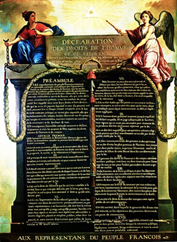
So here, I post “The Declaration of the Rights of Man and the Citizen,” promulgated by the revolutionary French National Assembly in 1789, just a few weeks after the fall of the Bastille, generally considered the initiation of the French Revolution. Diametrically opposed to the arbitrary power of kings and hereditary privileged ruling classes, the common rights it lists and defines have parallels to the American Bill of Rights. But unlike that document, it was created in the most powerful society in Europe, not in a peripheral wilderness as America then still was.
The Revolution’s ghastly Reign of Terror, then Napoleon would come later than these glowing ideals. But while those aftershocks are long gone, the Declaration still resonates with us today, as an expression of hope for a freer, happier, better world, shared by all the children of the “Supreme Being” of which it speaks.
It is always easier to destroy than to build; contrast the behavior of those who have brought such havoc to Paris with (for example) the Muslims who built the glorious water gardens of Cordoba in Medieval Spain. The nihilistic wrath visited on Paris certainly doesn’t carry on that constructive version of Islam, but again: It is easier to destroy (including self-imposed ‘martyrdom’) than to build (create).
After all, that’s too much like work. Including the work of nurturing Liberty, Equality, and Brotherhood.
The attacks in Paris targeted flesh and blood, but also tore at the sinew of civilization itself. That is, the precious desire of every person of good will to share our one world without fear, protected by law, reason and the better reflexes of humanity from lower passions that would destroy our world’s longed-for, uplifting – but delicate – harmony.
 All Things Gaul