‘Lo, How a Rose ‘ere Blooming – ‘

The title of this post is the traditional English translation of the name of a classic German Christmas carol, ‘Es ist ein Rose entsprungen.’ It refers to a rose, lovely and fragile, that nevertheless blooms amid the cold and darkness of Winter.

The rose referred to in those lyrics is Jesus, who offers light to the world, and not just amid the darkness of winter. His coming at Christmas, and the attached photo are connected by imagery of the rose. In this case, specifically, by a White Rose.

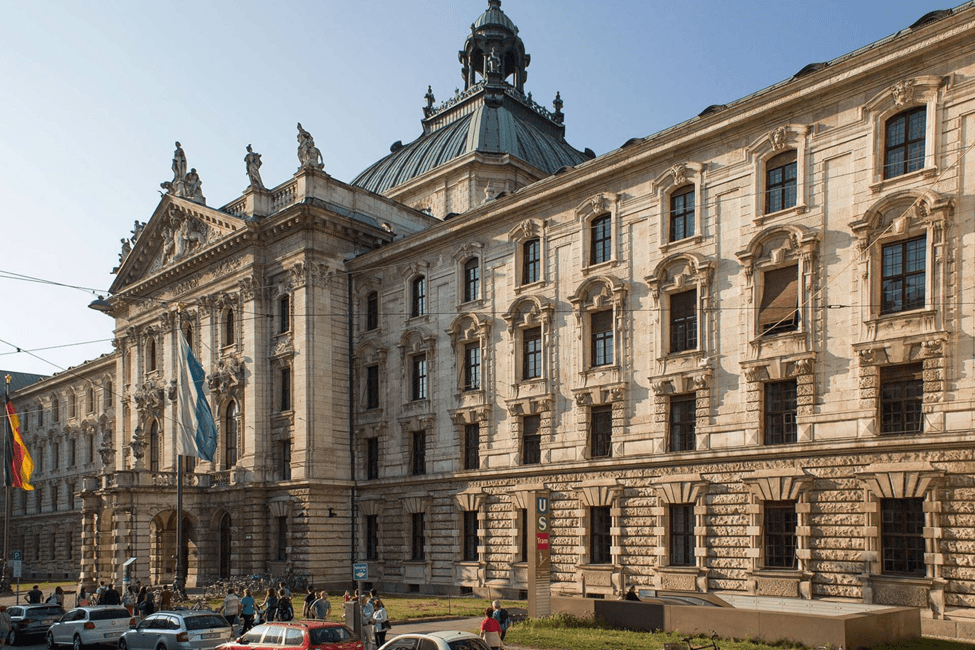
I took this during my visit to Europe last October. It shows Bavaria’s main courthouse, the Justiz Palast in Munich. In February of 1943, as the course of World War 2 was shifting irreversibly against Germany’s Nazi rulers, this building was the site of the trial of brother and sister Hans and Sophie Scholl, and Christoph Probst (arguably the intellectual epicenter of the circle), principal members of ‘Die Weisse Rose,’ the White Rose, code-name for a group of young resisters to Hitler’s regime. Its members had profound moral hostility to Nazism, and some, including Hans, had served in the Army on the Russian front, and witnessed German atrocities in the USSR.

The Scholls and their co-conspirators were patriots clear-sighted enough to know by then that the war was lost, despite the government’s frantic lies about its course. They wanted to save their beloved country from complete destruction by the overwhelming power of the enemies Hitler had brought down upon it. In fact, this courthouse still bears scars from the bombing that would befall Munich the next year, 1944.

But beyond patriotism, Sophie and Hans were also impelled by deep, resolute Christian faith. They knew perfectly well the awful risks they faced at the hands of the Regime’s savage Gestapo secret police, but felt stiffened to resist it by writing, printing, and spreading vehement anti-Hitler leaflets (considered high treason). They believed their creed, if sincere, obliged them to resist evil, no matter the danger.

Presumably, knowing that Jesus had accepted giving up His life for the world figured into their commitment. The White Rose’s members did not seek martyrdom, but did not shrink from its peril either.

Sophie, probably because heroism is not usually associated with women, has become a legend of principled resistance to evil. But she did not act alone; after being caught (by tragic happenstance) distributing their leaflets, she, Hans, and their associate Probst were arrested, tried, convicted, and beheaded. Sophie’s captors were so astonished by her courage and resolve, they offered to mitigate her guilt from the capital crime with which she had been charged, for they had surely never encountered such authentic nobility by doctrine-spewing Hitler Youth. But she refused to accept, forthrightly stating that she would not recant what she knew to be true and rightful, and bend to the ruthless might and criminality of Nazism.

I had not sought this building; only walking past it, and reading ‘Justiz Palast’ did it occur to me it was likely where White Rose members were tried by the screaming judge Roland Freisler, ‘The Fuehrer’s Executioner.’ To suddenly grasp what had happened here, then reflect on the soaring courage and honor once shown within was both arresting – I stopped mid-step as that realization came over me – and awe-inspiring. Unlike the recovered colored light in Notre Dame in Paris (described in an earlier post), here, my wonder was engendered not by powerful, inadvertent visual symbolism, but directly by human deeds.

If seemingly, more-than-human deeds.

The passionate idealism of the White Rose was the strongest possible rebuke to the carefully curated cruelty and fanaticism of the Hitler Youth, saturated by the Nazi state in racist, bestial ideology. If callow, juvenile men can be manipulated into believing that their worst instincts are actually nobly warlike, the Scholls and others showed how youthful ‘passionate idealism’ may also see right through malevolence, and valiantly oppose it.

If the White Rose members had been exclusively logical, they would have kept their mouths shut, their heads down and their non-combatant status as university students intact. But they did not, for they discerned a duty more precious than their very survival. In serving that, they did far more than deserve to be remembered. They have left a source of inspiration like few who have ever lived, igniting the full power of the soul to act beyond transient concerns, in the interest of values whose urgency never fades. Their determination starkly, absolutely contrasted with some of history’s worst acts of inhumanity.

The example of their bravery and self-sacrifice matters critically in a world where brute force such as (but not restricted to) Nazism too often seizes control of events. Again, the Scholls and Probst had stalwart Christian worldviews, so it seems likely that Jesus’ care for the whole human family – the antithesis of Nazi racial theory – must have been part of their inspiration.

(Of course, such devotion can arise from non-religious sources, but in this case, their intensely personal, if not rigidly formal, faith enabled these young folk to confront death, rather than yield to its menace.)

It is often in seemingly irrational deeds like theirs, floridly contrary to Self-interest, that the scope and potential of our humanity may sparkle most brilliantly. In such cases, we may benefit from decisions that cannot be rationalized, as much, or more, than from many that make perfect sense.

The White Rose was a bloom that will never wither, just as Jesus is the rose, blooming at Christmas, abiding despite all the malevolence in our oft-sinister world. By not doing the sensible thing, the Scholls showed that decency and honor have not perished – in a way adjacent to how Christ showed the same, in love and kindness. I am not nearly brave or strong enough to have done what they did, but am inexpressibly grateful to them for showing that, however implausible, it is not impossible.

Indeed, I have noted in other writings that our finest actions are often not our most rational ones. Surely, all readers of this post know of instances when people braved danger or suffered pain that they didn’t have to, out of simple, heroic decency. Or purest love.

Though this post seeks to honor the White Rose as an instance of aspiration adequate in scope for Christmas, nothing I write could possibly do justice to the splendor shown by its members, and especially its martyrs. The best I can do is to marvel at the implications of their deeds and ethics.

 As long as we have hearts to swell and eyes to tear with admiration, members of this tiny circle may be remembered; and emulated. They did not stop Hitler or his monstrous war, but proved that not even his towering evil could exterminate righteousness, for it was, and is, still to be found around us. An invaluable lesson and a spectacular bequest to the world.

I cannot accept that the human sphere must be merely a cynical contest of genetic material, of our individual gifts or our burdens. The White Rose was proof that such random circumstances can be exceeded, as Christmas suggests Divine hope – and faith – that we can each, conceivably, resolve to rise above such constraints. And far from being exclusively the refuge of the weak and passive, the Christianity of this trio, at least, made them guerillas for Christ.

The legacy of the Scholls and Probst reminds us how even the most demonic sway in our terrestrial element can never fully overcome the life force that summoned it, in the beginning, as ex-nihilo Creation. When hope guards rectitude as indispensable as that the White Rose defended, all the shadow in existence cannot, and did not, subdue it.

Reflections for Saturday, June 14: ‘Tough’ versus ‘Vicious’:

This post is occasioned by the surreally unself-aware fantasy planned for Washington D.C. for Saturday, June 14. As a taxpayer being charged to indulge that fantasy, I’d like to provide a (countering) reality check:

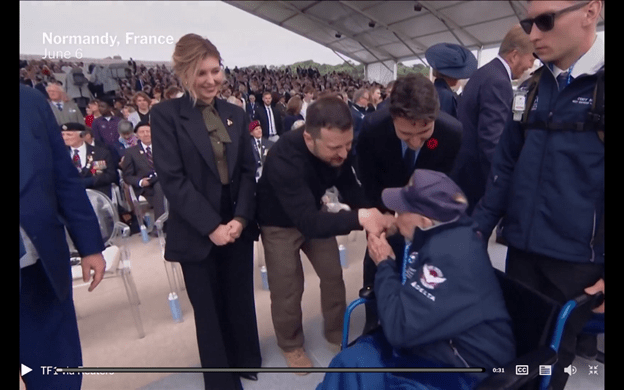
The accompanying image is from June 6, 2024, the 80th Anniversary of D-Day. The man in a wheelchair is Melvin Hurwitz, one of few living American veterans of that bath of fire in Normandy, attending a memorial service there. In awed gratitude, Hurwitz is kissing the hand of another distinguished guest and foe of tyranny, Volodymyr Zelenskyy, President of Ukraine.

‘You are the savior of the people!’ exclaimed Mr. Hurwitz, suggesting, rightly, how Zelenskyy’s ongoing fight to expel marauders from his homeland is, ultimately, on behalf of all who want a world not ruled by just-below-the-surface residue of our lower animal nature: brute force.  Zelenskyy reciprocated with respectful modesty, as one brave person to another. These men, having put their lives in jeopardy for righteousness decades apart, seem ‘tough’ in every positive sense.

Whereas those who present themselves as strong, but with a history of ‘dodging’ actual danger – and imposing harm or sacrifice on the vulnerable to prove their strength – are not: They are merely, contemptibly, ‘vicious.’

(Not that being authentically tough is invariably virtuous. Many loyal Nazis died fighting to enlarge or preserve Hitler’s Reich. But my focus here is unmasking pretense of stalwart character.)

Vladimir Putin is certainly such. One may recall photos of him during COVID, sitting at the end of a comically long table with conferees at the far end, so Putin could stay safe from contamination. Hardly a display of great personal courage; over-cautious, at the very best.

If he were as brave and patriotic as he wants the world to believe, he might have volunteered to leave East Germany, where he was a KGB agent, to serve as a political officer among Soviet troops invading Afghanistan in the 1980’s. That’s what he could have done, were he willing to put his life at hazard for his country on a savage battlefield.

But men like Putin are as adept at cynicism as rationalization, and thus prone to perceive (or at least describe) real selflessness as naiveté by ‘suckers and losers.’

Which brings us back to the point of this post. Readers can surely think of other public figures determined to be thought resolute (and ‘manly’), although they are known to shrink from personal hardship, let alone peril.

‘Tough vs. vicious’ is a crude distinction, but we’re dealing with a crude reality: Those like Zelenskyy are genuinely tough: Willing to face and overcome adversity for goals that are undeniably just and rightful. Whereas Putin, and men like him, are just vicious; perfectly willing to cause others pain, but shirking risk themselves.

(Few females claim to be ‘acting like women’ when ravening like animals. I regret that we males seem far more apt to act on our baser inclinations – then insist such ‘ape-titudes’ are virtues. However, I have seen and known women who can be tough in the very best sense: gallant.)

My term for such men is Counter-Evolutionaries. They benefit from cultures, societies etc., in which the Law of the Jungle prevails, rather than the World that is possible if humanity got better: Kinder, less prideful, more empathic and communal. None feeding their Egos at the expense of others’: More ‘Evolved.’

Such Evolution (defined as outgrowing tendencies of creatures that lack Reason) of our nature is the last thing Counter-Evolutionaries want. They resist it reflexively and deliberately, preferring an immutable cockpit in which the merciless prey on the weak, and they can exploit human reason to serve feral instinct.

They may even try to reverse the tide of history to restore situations in which they throve and exalted, no matter how objectively bad they were for others (like Putin’s USSR fetish). And they try to hoodwink or coerce the rest of us to share or submit to their primitive worldview.

My tough-vicious dichotomy may seem coarse and simplistic, but still offers a useful, not wholly inaccurate, perspective: Bear in mind that being thought tough is often craved by the craven. Also, that a man focused on a retrograde goal like physical dominance is likely not up to the complexities of 21st Century rulership.

Thus, I see the ingenuity of Ukrainians defending themselves from the ferocity of hospital/school/mall-targeting Russian intruders by using brains instead of brutality as a hopeful, if tragically slow, sign of our species’ progress. Their innovative, carefully planned and skillfully executed resistance has made victory costly, maybe impossible, for Putin, whose habitual recourse is blunt force.

A regime like his is not apt to be fertile ground for ‘innovative, carefully planned and skillfully executed’ tactics or policies. Despots usually prize loyalty over competence, a priority that has eventually undone many of them. As may well be happening in the Kremlin.

Nobody is perfect. Zelenskyy must have failings; we all do, even oft-lionized Churchill. But most of us still appreciate ideals of courage and honor – such as this image celebrates – in which to place hope, faith and trust, rather than simply drowning in the vortex of life’s squalor.

And squalid is how Brutes-in-suits like Putin view most of us; they presume everyone is as malevolent as themselves, or fools and weaklings if they aren’t. In their mindset, the only admirable course is to grasp wealth, power, fame, by any means.

Consider this picture again: This is not just what toughness looks like, it shows how it behaves when it is truly ‘honorable’: two true fighters against forces of darkness, recognizing and rightly hailing each other.

It could be a tableau of nobility for the Ages.

Americans may want to bear this image, as well as my tough vs. vicious generalization, in mind Saturday, June 14, to offset the grotesque spectacle of self-delusion anticipated that day in Washington.  

Given the current state of our nation’s affairs, we should probably just be content if no horses in the Parade get appointed Senators.

American Police: Which Vision will You Defend?

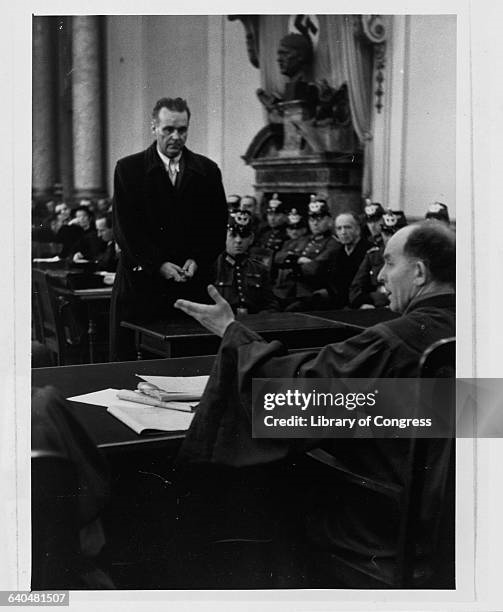
The accompanying image shows Roland Freisler, Chief Judge of Nazi Germany, in his court. Sometimes called ‘Hitler’s Executioner,’ here he is being watched by a group of regular German police in their distinctive helmets.

I don’t know who the man facing Freisler is, but if he was in the hands of this robed thug, he was almost certainly considered an enemy by the Nazis. He had likely been tortured, and this trial is a sham pretense of judicial process, performed for purposes of propaganda and public intimidation. He is probably doomed, as Freisler routinely imposed the death penalty. His melancholy facial expression shows he already knows his likely Fate, as not so much the ‘accused,’ as the ‘condemned.’

This image implies something American policemen and women may find themselves facing: The critical, pivotal role of ordinary ‘cops-on-the-beat’ in facilitating tyranny.

The Gestapo, Hitler’s savage Secret State Police, never numbered more than a few thousand agents, when Germany’s population was nearly 70 million. So to make up for their small number, that baleful Bund encouraged the general public to help suppress disloyalty by spying on, and denouncing each other.

But for actual day-to-day enforcement of Nazi law and oppression, the Gestapo largely depended on local police in Germany, and in lands they conquered in their wars of aggression. They were the practical force that implemented most Nazi tyranny; without their active cooperation, Hitler’s security apparatus could never have had the fearsome control that it did.

American policemen and women today should bear this precedent in mind: Generally, ‘tyranny’ cannot function without the help and complicity of people like themselves. So if they realize they are being suborned for policies that repress, rather than protect, freedom, they may be wise to consult their consciences (and their own long-term best interests) before taking a first step onto a slippery slope of being the henchmen of ruthless Hierarchs whose only real principle is the defense of their own interests.

(Officers should also remember that Authoritarians rarely reciprocate loyalty. They may privilege their enforcers in the short term, but will remorselessly sell them out to benefit or save themselves. If they were honorable, they most likely would not need to be ‘authoritarian.’

Before aiding such a person, officers should consider his record for showing loyalty – with deeds, not just words – to those who show it to him.)

And to beware of any pretense of serving society (or just some ‘worthy classes’ of it) by carrying out directives that are clearly intended to do the opposite. For example, Freisler’s department was officially called ‘The People’s Court,’ (Volksgericht), when it was obviously mainly a tool of public control, and state terror.

Surely, Americans did not give their lives at Anzio, Normandy, Bastogne etc., in the belief they were helping to destroy Nazism, only to have something alarmingly similar eventually develop here. Do we no longer appreciate their sacrifice?

Officers, would you really want to do something Adolf Hitler would approve, like enshrining the merciless rule of the Ruthless over the sacred Constitutional rights of American citizens?

I hope our police begin to anticipate this scenario. What vision of ‘law and order’ are they willing to defend? One like that pictured here? Or the vision to which Americans profess to aspire, of life, liberty and the pursuit of happiness? And not just for themselves, or those just like themselves.

Our lawmen and women may have to face whether they are (or ever have been) serious about such ideals, or are just paying them lip service. They may have to decide at what point they will no longer be willing to ‘just follow orders,’ if the orders they are being given are unmistakably intended to distort the letter and spirit of American law – more than has ever happened before in our history – for the benefit of a cynical, insidious, self-interested minority.

Distant lands may not be the only places where Americans’ liberties must be struggled for. Who, exactly, do our regular polices’ consciences bid them to ‘serve and protect’? Better to ask themselves such questions now, than to suddenly confront those decisions, unprepared.

And to reflect on the meaning of this picture: Police as servants of evil, rather than its adversaries.

Grains of Sand for Infernal Machines:

CONTEXT: I first posted the accompanying New York Times article (along with my own commentary) in 2020, shortly before COVID appeared and wracked the world. Then we had more immediate dangers to worry about.

Rather than this long-term one. Somehow, it feels like a good time to post this perspective again. On the premise of ‘an ounce of prevention.’

—————————————————–

This New York Times piece is one of few things I’ve reposted here, but it seems especially worthy. It advises how ordinary people can help thwart extraordinary evil by just not abetting it through passive resignation. And such ‘ordinary people’ surely includes me.

Friends who remember my postings about sites associated with Nazism from my 2016 trip to Europe may recall that I admitted not being brave enough to have overtly resisted Hitler’s rule by terror. In my post about a cell in the ruins of Gestapo headquarters in Berlin, I marveled at the ‘Olympian’ courage many prisoners held there must have shown, withholding vital information that savage interrogators tried to wrench from them with fearsome tortures.

The bravery of those who fight tyrants despite great odds is the inverse of their foes’ evil. They shine some of the brightest radiance in human nature into some of its darkest recesses; like that cell.

But other than praising such heroes and asserting that we who now enjoy peace and freedom partly due to their refusal to yield intelligence (that might have enabled Hitler to win) should honor them forever, I had no further recommendation. Not being heroic myself, I can hardly exhort others to be so, can only urge us all to be mindful and grateful to those with the character (or whatever alchemy gives some men and women the hearts of lions) to actively defy, and thus often help thwart, the full measure of Inhumanity of which Man is capable. One should feel awed by their strength, even if also humbled – and ineffectual.

Now, to the rescue from such disempowerment comes this NYT piece. It asserts that thinking our only possible responses to atrocity are overt resistance, or feeling helpless and inert, is a false, even harmful, dilemma. Righteousness may not be as hard or perilous as these stark alternatives suggest. Crime on a vast scale often depends on many factors – including bystanders not getting in the way – operating unimpeded if it is to avail. This essay prescribes non-dramatic actions one may take to diminish or frustrate the harm the wicked can accomplish.

Moreover, it says that assuming that we can do nothing absolves us, mistakenly, from considering how we might hamper criminal enterprises with minimal effort and risk, thus preserving our moral integrity while often aiding innocent victims. The author, a descendant of German Jews who left their homeland soon after Hitler took power, points out how the Holocaust could never have functioned so efficiently had non-Jews, in Germany or its conquered lands, encumbered it by withholding their cooperation, or abject passivity. Silence may not always give consent, but neither does it impede.

Indirectly hindering some demonic activity is not the stuff of legends like actively confronting it, but may still help slow or even grind it to a halt. Heroes of resistance should inspire us, but superhuman deeds may not be the only strategy available against horrendous undertakings.

If we cannot all radiate light as heroes do, we may try to reflect their brilliance, or at least not be acquiescent voids in which darkness may easily prevail. In my eulogy for my mother in 2015, I wrote that my late parents were very fine people, but not ‘demigods’, and that great scientists, explorers, titans of business, etc. – those whose feats benefit many lives (in addition to noble souls who dared the worst to fight the likes of Nazism) – form a thin stratum of our species who figuratively ‘help keep the world turning.’

But I also wrote that most people, although our lives and deeds are far more modest in scope, can still contribute something hugely important. We can make our world ‘Worth continuing to turn,’ rather than just be a grim cockpit where the strongest creatures rule and survive somewhat longer, but the Universe would be essentially unchanged if our planet fell into the Sun.

For most of us, helping to preserve the positive energy of conscious existence simply by not obstructing it may be the greatest impact of our time on Earth. That is individually modest, but collectively stupendous, the least of which we should all be capable, differentiating us among worlds and arguably the highest use of the human gift of reason: To try to tell right from wrong. And not everyone succeeds at this basic (if often difficult) task; we have all known people whose acts and attitudes make the world a worse place, even if not at the level of a Hitler.

This author helps us to seek the best in ourselves, to see how, even if we cannot be Odyssean, we may still help curb the deepest malice of the wicked. Even ordinary folk like me can do our small, but vital part, helping to disrupt the Devil’s vision, if we ever find ourselves in its periphery.

May none of us ever have to do so, but may we remember this lesson if Fate presents us with the choice.

Putin and the Death of Navalny: The Vicious and the Valiant.

Various personal distractions have kept me from focusing on the followup post I mentioned at the end of my last one, ‘Promoting Freedom by Protecting Memory,’ about the 1905 Winter Palace Massacre in Czarist Russia. But to paraphrase Samuel Johnson, death ‘concentrates the mind wonderfully.’

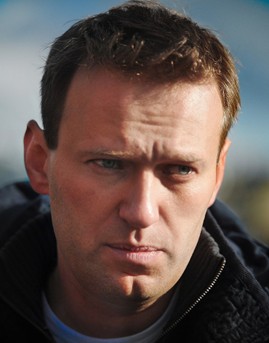
And the death of Aleksei Navalny, all but certainly due, directly or indirectly, to Vladimir Putin, has concentrated my mind furiously, catalyzing that promised sequel, here. It will not take the form I originally envisioned, will serve largely as a partial vent for my current writhing wrath at Putin. Although that feels inexhaustible.

Dedicated to Navalny, this post proposes suggestions of how to perceive, and what to do in response to, his death. I will not advocate for revenge; vengeance is the province of spiteful men like Putin (and Hitler, who literally spoke of a ‘goddess of revenge’). Instead, justice is what we should rightly seek, and that can best take the form of punishing Putin by helping to thwart his mania to conquer and subjugate Ukraine, an enterprise whose criminality, cruelty and reckless stupidity Navalny condemned relentlessly.

Even if Navalny’s eventual Fate was not a real surprise to those following his opposition to Kremlin tyranny and corruption, it was still a shock. He may be credibly said to have represented what is good, noble, hopeful – and truly evolved – in us, as surely as Vladimir Putin personifies all that is not. No doubt he was flawed like everyone, but also exemplified attributes we properly admire, but rarely attain, such as granite-hard determination. One needn’t be angelic to offer a stark contrast to Putin, but Lion-hearted Navalny was a more extreme opposite than most of us could ever be.  

The likes of Putin, who incarnate dark forces of human nature and history, are desperate to quell such noble impulses which they regard with cynicism and bewilderment, as obstacles to ‘realism’ in politics. But they are desperate fools if they imagine they can dissipate the loftiest acts and aspirations of Mankind with the odd well-placed assassination. Granted, the relative passivity and credulity up to now of the bulk of the Russian public to Putin’s criminal aggression against Ukraine has likely encouraged him to persevere with it. But his incomprehension of ‘principle’ makes it impossible for him to recognize that he cannot eliminate massive, rightful and reparable discontent by ‘well-placed assassination.’ Eventually, the underlying grievances will burst like a volcano’s lava dome, not manifest only in epic characters like Navalny.

Predictably, men as heartless and crude as Putin regard valor as folly, and likely felt Navalny was a fool for returning to Russia from Berlin, where he received medical treatment for a near-fatal poisoning (that was surely Putin’s doing). But authentic heroism is very different from folly.

Someone like Navalny – as he showed in deeds, as did the journalist Anna Politkovskaya – grasps a truth invisible to anyone like Putin: To a soaring soul, there can be values more precious than his own interests, or even his very life. And for Aleksei, the happiness of his country and her people was one such value. The Putins of this world – wherever they are – are blind to such concepts, cannot comprehend flights of the human spirit or seemingly anything but the coarse, transient rewards of ‘What’s in it for me?’ (As an American admirer of Putin once mocked American soldiers – who had died for their country in World War I France – buried ‘over there.’) Any ethical vision they may have ever possessed is occluded by the moral muck of unabashed self-dealing and indifference to collateral harm which they inhabit.

If you also are outraged by Navalny’s suspicious death, there can be no better response to it than to justify his courage by calling for immediate, greatly enhanced Western support for arming and aiding Ukraine against Putin’s militarist fantasies there. And by furthering – in any way you can imagine – Putin’s worst nightmare (and partial reason for his terror at the westernization of Ukraine): Creation of true, irreversible civil society, and the valuing of individuals, in Russia herself.

Because the inertia and indifference of Western public opinion are as vital as oxygen to Putin. His invasion assumed the Democracies, in their affluence and security, would do nothing meaningful in response to it, and let him go on heedlessly spending Russian and Ukrainian lives in pursuit of his delusional 19th Century style Chauvinism.

But using Navalny’s demise as a spur to frustrate the dark powers he struggled against is surely as effective a memorial, to his life and his death, as there could be. If I could somehow speak to the Russian nation, I would assure them that there are foreigners who hail their forefathers’ bravery in their country’s defense. I might then point out that Navalny faced huge, avoidable, risks for their sake, and in gratitude and inspiration, they might be willing to face lesser ones to validate his sacrifice.

The Russian people have never been more formidable than when their patriotism was inflamed, as Napoleon and Hitler learned; for their Motherland, they can, and will, fight like dragons. Given the extraordinary deeds that the great-grandparents of today’s Russians performed – rolling back Hitler’s barbarous rampage in their land all the way to his lair beneath Berlin – perhaps an appeal to their love for their country (rather than loyalty to its despicable leadership) and to their own dormant lion-hearted courage, is the best way to lead to the final destruction of autocracy in their midst:

For Autocracy continues to hold back their already splendid nation from attaining its full greatness which is to be found in its vast contributions to the arts and sciences; not in Mongol-style territorial expansion.

The World’s Democracies’ stalwart devotion to (and enlightened self-interest in) helping to sustain Ukraine may stoke the slumbering patriotism of the Russians by confronting them with just how utterly indifferent their current Czar is to the lives of their sons, husbands and brothers he will continue to waste in Ukraine; how totally focused he is on realizing his own fantasies of glory, and his horrifying concept of national honor.

I realize all of that is easy for me to say, far from Putin’s fierce police, tear gas, stun guns, and rubber batons. But Russians will face such forever if they don’t liberate themselves; as they did in 1917.

Speaking of 1917, there may be a grim but intriguing irony developing here. The rule of the last Czar, Nicholas II, was corrupt, incompetent and unsuited to modernity, but Nicholas was ultimately brought down by continuing to fight a conflict he had rashly helped provoke, but could not win – World War I – whose grave sufferings for his people he was too stubborn, prideful and oblivious to take seriously. In 1917, those people had finally had enough of him, his war, the feckless social order he represented, and they ousted him and his whole rotten misrule.

Perhaps Navalny’s murder will ultimately put a similar flame in today’s Russians, suffering due to a war Putin is too proud and indifferent to his people’s wishes and welfare, to recognize as utterly not worth the cost. Perhaps they will echo 1917, accept that they must take their destiny into their own hands, and repeat history by overthrowing him and his kleptocracy. Putin, as I have noted in other posts, suppressed official observance of the 2017 centennial of the fall of the Romanov dynasty, so it would be tragicomic if he comes to share their Fate due to his own myopic megalomania.  In stifling public memories of 1917’s regime change, he himself may have lost sight of its crucial lesson: Rulers dare not take their subjects’ patience, obedience and timidity for granted.

Thus, he might provoke the very sort of popular uprising he wanted his subjugated public to forget, because he himself neglected its warning, and overestimated the feasibility of eternal repression. And his own eventual Fate might prove messier than the Romanovs’, who got gunned down in a Siberian cellar.

If so, let him face the dreadful destiny of Nicholas II to which his own cruelty consigns him, of obstinately clinging to a path that is as obviously unwise as it is repugnant (and in this, I don’t just mean the invasion of Ukraine, but his whole corruption-protecting police state apparatus), until his own people tear him from power. Or worse.

It will serve Putin right (and be a valuable warning for other tyrants) if he is devoured by the very forces that he has been arrogant, brutish and obtuse enough to disregard, or hubristically suppose he can control forever.

An intriguing premise, that: a self-isolating despot’s inability to recognize that he has slipped into a ‘reality’ at odds with the actual one, leading to the downfall of which he is no doubt petrified. Such self-destruction would prove there can be justice in this world.

And to my fellow Americans, I would warn that we must recognize the peril of letting someone like Putin, insensate of his people’s blood and sorrow, outlast our resolve to stop his current, terrible enterprise. Thus, we should demand more vigorous U.S. aid to frustrate his faith in brute force, and contempt for any moderate exercise of power.

But even more important, Americans must think Very carefully about abandoning our image – to ourselves, and to the world – as friends and defenders of human liberty and progress (the accompanying image was chosen as a reminder of exactly that) by supporting any U.S. movement or politician that considers Vladimir Putin’s savagery ‘irrelevant’ to American interests. Or worse, admirable in itself.

Or supporting any person or party that doesn’t issue a full-throated, unreserved condemnation of the murder of Navalny, as well as all other Kremlin efforts to cradle-strangle individual freedom. Remember: Silence Gives Consent.

(Admittedly, America has its own ‘lava domes’ of justice denied, but they do not include overtly larcenous looting of the national economy, nor domestic political assassination as statecraft. And they are subjects for another time.)

May Navalny’s example flourish in death, even as Putin’s putrefies while he is still alive. To close with a sentiment that could well have inspired Navalny himself, ‘Blessed are they that hunger and thirst for righteousness, for they shall be satisfied.’

It is a rare privilege to witness souls as great as his, who hunger and thirst thus; especially when their goals seem futile. Surely, it behooves us, thus privileged, to help if we can, to ensure his quest was not ‘futile.’